Friday, January 9, 2015

What Types of Events Cause Immediate Changes in Human Behavior/Personality?

 Can a single event cause a permanent personality change/adoption of behavior?  (Leishman)

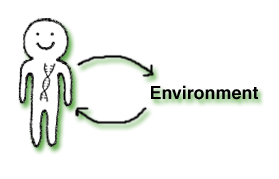
As part of the stated goal in my last post, I am attempting to explain to my audience the underlying reason(s) behind their behaviors, so that they may understand their own actions as well as those of others.  Previously, I have described how genetic and environmental influences contribute to individual behaviors.  In summary, one's biological makeup and surroundings usually play crucial roles in influencing their behaviors and identification as an introvert or an extrovert.  Thus, it would seem as if one's personality as an introvert or as an extrovert is built over time, as it is originally coded for in the genome, but it is then constructed upon in the form of personal experiences and environmental influences.  However, is it possible for a single event to influence an individual to become a full-fledged introvert/extrovert?  Additionally, is it possible for an individual who may be leaning toward being a moderate introvert/extrovert to immediately favor the other end of the spectrum as a result of a single event?  In other words, contrary to the idea that one's personality and behaviors are a result of genetics and personal experiences over time, is it possible that a single event could determine for an individual whether they will be an introvert/extrovert?  According to Nigel Barber in his article, "Trauma Resets Personality," the answer is yes.  While most personality attributes in humans are constantly changing ever so slightly due to differing influences, Barber explains that sometimes certain events occur that forever change the personality and behaviors of some individuals.  As Barber describes, these events are most often associated with unpleasant experiences and fear.  He compares the influence of unpleasant experiences to those that are pleasant, dictating "that we are more profoundly altered by highly unpleasant experiences than by highly pleasurable ones, possibly because painful experiences signal imminent threats to survival."  After, he goes on to describe the presence of fear as a "powerful motivator."  In AP Psychology class, one of the topics that my teacher covered was a concept known as "operant conditioning."  In essence, this concept centers on the idea that an organism/an individual can be trained based on a system of rewards and/or punishments.  If an individual is rewarded for a behavior, they are more likely, if presented with the decision, to behave in the same manner, anticipating future rewards.  However, if an individual is punished for an action, they are more likely, if presented with the decision, to defer from the behavior, fearing future punishment.  In this same manner, Barber describes that, at times, an event may occur in an individual's life in which they are traumatized, or at least given cause to be afraid.  Because of this event, as Barber explains, the individual(s) affected by this event will likely defer from similar situations and/or behaviors in the future.  Basically, if an individual is given cause to become extremely embarrassed or afraid due to a single event, their personality/behaviors will change so that they can avoid similar experiences in the future.  If the "trauma" presented by this experience is so extreme, the individual may develop extreme/severe personality attributes, even if such personality is contrary to the one that they had previously developed prior to the event.  Barber places such an emphasis on the unpleasant nature of the experience because humans are more affected by unpleasant events than by pleasurable ones.  Humans/organisms can live in a life without pleasure, although if they had the option, they would rather enjoy life than just live through it; conversely, humans/organisms cannot function properly in a life filled with fear and danger, so they must actively seek to avoid such experiences.  Barber notes that "fear of physical harm is one important source of psychological problems.  Fear of social rejection is less obvious but potentially just as important."  Finally, he explains that reactions and recollections of events associated with such fear and anxiety are controlled by stress hormones, which provide the cause behind behavior.  In application to some extreme introverts and extroverts, these individuals may be in the situation that they are in because of a certain unpleasant/traumatic event.  Whereas this single event may not have been life-threatening, it may have at least caused extreme/severe embarrassment, so the individual, under the influence of stress hormones, thus chooses to adopt extreme personality attributes so as to avoid subsequent social embarrassment, or at least to convince themselves that they may be safe.   Fear of social embarrassment, brought on by a single event, may even cause the individual to adopt a personality switch.  For example, an extrovert who is relatively popular in school and is very talkative may be embarrassed by an event at a party/by an occurrence while giving a speech.  As a result of this single event, this former extrovert may permanently adopt behaviors indicative of full-fledged introverts, refusing to talk to people and sitting in the corner.  Because this single event was so unpleasant, the individual went from being an extrovert to an introvert so as to avoid future confrontation with embarrassment.  Conversely, an introvert who is relatively quiet and reserved may be similarly embarrassed by an event at a party/by an occurrence while giving a speech.  However, in this case, the individual, as a result, may permanently adopt behaviors indicative of full-fledged extroverts so as to give off the impression that they are impenetrable to embarrassment.  This individual believes that because they act as if they shrug off shame, they will never again be placed in a similar situation.  The significance of this phenomena is that because it does occur, such experiences may occur in anyone's life.  At any point in time, an individual may be faced with such embarrassing/traumatic event, and as a result, adopt personality changes.  Contrary to popular belief, the "egotistical" social butterfly and the "meek" hermit may actually have merit behind their behaviors.  I am not making claims about social groups, but I do advocate that individuals in society should sympathize for/empathize with/understand the behaviors of individuals different from them.  In addition, these changes do not have to occur on the drastic scale; one can simply adopt slightly more introverted/extroverted behaviors as the result of a single event.  Such changes, small or large, may have occurred in your own life concerning personality and behavior and you may not have recognized it.  For that reason, you may not be so different from the individuals described before.  As a take-home point, the behaviors of some introverts/extroverts may simply be due to a single event that now influences such individuals to avoid similar situations.  Thus, these individuals may adopt behaviors are either slightly or drastically different from their common actions.  Not only can individuals account for the adoption of some of their own behaviors and personality attributes, but they may also be able to recognize the underlying reasons behind the actions of others.  Lastly, as a point of advice (in my previous post I also noted that I wanted to be able to point out that individuals can actively change their behaviors/actions/personality/social disposition), a behavior driven by fear can be changed by casting away/ignoring such fear.  In other words, if an individual truly wants to change their personality or behaviors, but are held back by the embarrassment or fear from a prior event/prior events, they can still actively make a difference for themselves, even if it may be difficult.

Works Cited
Barber, Nigel.  "Trauma Resets Personality."  Psychology Today.  Sussex Publishers, LLC, 13 Dec. 2012.  Web.  9 Jan. 2015.
Leishman, Ron.  "Cartoon Kid with a Paper Bag on Head."  Toon Vectors.  Toon Vectors, 2 Nov. 2012.  Web.  9 Jan. 2015.

Friday, January 2, 2015

What Brings Out the Qualities in Us That are Indicative of Introversion/Extroversion?...And What is the Point of This Project?

Based on the situation/environment, individuals may/will express different qualities (Zemack, Dana).

As previously discussed, few people are full/true introverts or extroverts (one would cease to function as a member of society if they were a true introvert, and they would also cease to function in company's absence if they were a full extrovert).  Whereas many people generally lean toward one end of the spectrum or the other (in the case of introversion, seek less stimulating environments, and in the case of extroversion, seek more stimulating environments), most humans are categorized genetically as ambiverts, in that they have a general balance of introvert and extrovert features (genes, qualities, etc.).  However, when looking at one's fellow members of society and peers, one can still usually categorize another as an introvert or extrovert based on their expressed phenotypes (physical qualities) at the moment.  If most humans are ambiverts, except for slight genetic tendencies to lean one way or the other, why do individuals express different qualities that lead to their surface-level designations as introverts or extroverts?  In a discussion with Dr. John Peles, my mentor for this project, Dr. Peles touched on this topic, directing me towards a textbook that he uses in his behavioral genetics class, the sixth edition of Behavioral Genetics, by Robert Plomin, John C. DeFries, Valerie S. Knopik, and Jenae M. Neiderhiser.  In simple terms, both Dr. Peles and the textbook answered that the underlying factor between individuals' genes and the actual qualities that they express is the relationship between genes and environment.  Previously, I discussed a concept known as a "genotype-environment interaction," although at the time, I had only a basic understanding of the topic.  As of this point in my research, I still only understand some of the many topics related to the behavioral differences between introverts and extroverts, but now I can at least better explain the genotype-environment interaction, a concept vital to the expression of the qualities that lead to our designation as introverts or extroverts by our peers, along with its complementary topic, the "genotype-environment correlation."  The basis of the genotype-environment correlation is that one's genotype, or their genetic constitution, affect the individual's discrimination in creating their environments.  In other words, genes determine environment.  Because most individuals do have a,  albeit small, genetic leaning toward being an introvert or an extrovert, they thereby place themselves in environments conducive to their needs/preferences.  As a result, by witnessing individuals functioning at their best in certain environments, and by witnessing the effects that these environments have on the qualities and behavior of individuals when they are in different environments, other members of society generalize and categorize these individuals as introverts or extroverts.  Because of one's genetic leaning, they express comfort in certain environments, as well as discomfort in others, and they learn, as an effect of these environments, to further express qualities that would be conducive in these environments, even if they may go slightly against their genotypes.  According to the textbook, there are actually three types of genotype-environment correlations: passive, evocative, and active.  The passive type of genotype-environment correlation is not actually based on the individual genes, but on the genes and decisions of the individual's parents/guardians.  Because all humans seek environments conducive to their comforts and needs, they will obviously attempt to replicate such environments at home, where they have the most control over their environment, and where they feel that they can create the best environment for their children.  This concept is also known as "nature of nurture," in that as a child, an individual may inherit or acquire attributes, qualities, and/or skills from the environments that their parents have created.  The textbook uses the example of two musically-gifted parents, who create an environment at home for their children that has an emphasis on music.  As a result, the children will naturally inherit both a respect and a skill for music.  Likewise, if both parents are introverts, they may create an environment for their children where expressing qualities indicative of an introvert is favorable over expressing those indicative of an extrovert.  Even though an individual may have a genetic leaning toward being an extrovert (or conversely, an introvert), because their parents express qualities indicative of introverts (or conversely, of extroverts), their environment at home may cause them to adopt qualities and attributes mostly belonging to introverts (or conversely, to extroverts).  The evocative type of genotype-environment correlation is based on the environment created by others' reactions to one's qualities.  Because an individual may already express qualities that would categorize them as introverts or extroverts, others may introduce them to environments on the assumption that they would best be suited for such situations.  As a result, even a slight genetic leaning toward being extroverted (or being introverted) may lead others to categorize an individual as such and then introduce them to environments (or create environments) that would be favorable for extroverts (or for introverts).  Thus, by being placed in these environments, individuals may once again gain qualities that may have previously been against their genetic coding.  Looking at the textbook again, the example is made of the musical child, whose skills are noted by others, so they are given special opportunities (such as participation in music festivals or friendship by other musical individuals).  Likewise, if an individual expresses some qualities that would slightly categorize them as introverts or extroverts, other introverts/extroverts may attempt to befriend them, or their bosses may place them in an area of the workplace where they feel that they would be most comfortable.  As a result, because of the few indicative qualities that they express, an individual is placed in an environment that may further foster qualities and attributes representative of the categories they suggest that they may fit in.  Finally, the active type of genotype-environment correlation is the one that has been previously illustrated, based on the idea that an introvert (or conversely, an extrovert), will actively seek environments conducive to introversion (or conversely, to extroversion).  The textbook uses the example of a musical individual who pursues musical activities and attempts to make friends with other individuals who are musically gifted.  In the active type, the individual select, modifies, constructs, or reconstructs environments so that they can best suit their comfort and/or needs, and in the meantime, such environments may lead this individual to acquire additional qualities indicative of their type.  In relationship with this "genotype-environment correlation" is the previously discussed "genotype-environment interaction," which is best explained in that environment brings out one's qualities.  Although an individual may possess a genetic leaning toward being an introvert or an extrovert, they may not express such qualities in some environments for one reason or another.  However, because this individual has a "genetic sensitivity" to some environments, their qualities are brought out in other certain situations.  The book does not use this example, but to keep with the example of the musically gifted individual, the individual may not express the noted quality at an office job or in math class, but at the theater or in band class, they will express this quality.  Likewise, an individual may show different qualities indicative of introversion and/or extroversion based on situation.  For example, the individual that is quiet in the workplace or at school may be designated as an introvert.  Because they recognize the necessity of the completion of their work, and of the risk of offending those that they are not particularly familiar with, they may seem to shy away from human interaction.  However, this same individual may be the "life of the party" if they are surrounded by their friends.  Because there is no work to be done, so stimuli cannot interfere with their senses, and because they recognize that they can be comfortable around those that have outwardly accepted them, they may act out.  As a result, their friends would see the individual as an extrovert.  Conversely, an individual may express qualities indicative of being an extrovert at school and in the office, where they are surrounded by peers who they may not care what they think of them, but this same individual may express other qualities indicative of being an introvert at a party with older kids and in the boardroom, where they are intimidated by their surroundings and value their relative success.  Therefore, both perception of and genetic sensitivity to environment can affect the qualities that individuals express, which may earn them different designations as an introvert to one group in one situation and an extrovert to another group in another situation.  Because of genotype-environment correlation and genotype-environment interaction, individuals gain and express certain qualities that are indicative of introversion and extroversion, even if their genes mostly say that they should be ambiverts.

After reading my previous posts and deciding on the topic for this post, I realized that there was still a question, among others, that I was struggling the most with to answer: What is the point of this project?  I deliberated for a while attempting to answer this question even for myself, and I could not seem to reach a conclusion.  Finally, however, I found my answer: The point of this project is to help others' understanding with this topic.  I want others to understand why they act the way that they do.  If somebody struggles with the fact that they express qualities mostly indicative of introverts (or extroverts), I want to explain to them why they express such qualities.  Moreover, the point of this project is to prove to these individuals that genetics may have a hand in determining one's qualities, but because environment also plays a hand in the expression of these qualities, they can change their qualities (and their actions) by making the decision to change their ways.  Because I have not touched some aspects of these topics yet, I still have more research to do.  Furthermore, I want to explain to one group (introverts/extroverts) why the other group (extroverts/introverts) acts the way that they do and what these qualities really mean.  I am trying to debunk the myths and stereotypes typically associated with introverts and extroverts so that everyone can have a better understanding of each other.  How will I do this?  I still need to release my survey so that I can understand and recognize for myself what society's opinions and leaning really are.  I am also working with Dr. Peles to create a collaboration with some of his coworkers where we may design a personality test so that we might establish a link between one's genetic leaning toward one end of the spectrum or the other and their parents' leanings.  In order to get all of the information that I want to convey out to the masses, I plan on using this blog as a source of communication, and I am also toying with the idea of creating a flyer or other media device to communicate my findings.  The survey will hopefully/probably be out by January 5.  This project, already a few months in the making, still has many more months of research and information communication to go.

 
In essence, a flyer like this may be one of the products of my project, although it will be more elaborate and research-based (chibird).

Works Cited
chibird.  "introverted extroverts."  Tumblr.  Tumblr, n.d.  Web.  2 Jan. 2015.
Plomin, Robert, John C. DeFries, Valerie S. Knopik, and Jenae M. Neiderhiser.  Behavioral Genetics.  6th ed.  New York: Worth Publishers, 2013.  Print.
Zemack, Dana.  "Look at Me! Leave Me Alone!"  Jezebel.  Kinga, 9 Mar. 2012.  Web.  2 Jan. 2015.

Friday, December 19, 2014

How Does Society Perceive Introverts and Extroverts? Do These Perceptions Have Warrant?


 At this point in my research, I was planning on finalizing and distributing the survey that I had shared earlier on this blog, along with continuing my investigation of the behavioral differences between these two groups and the reasons for which they occur.  However, for this blog post, I have decided to lead my research on a tangent, inspired by a link that Ms. Hetrick, my AP English II teacher, sent me.  This link leads to an article titled "Here Are the Things Introverts Say on Facebook," where author Melissa Dahl shares with readers the (supposed) typical subjects/words that introverts and extroverts post about on Facebook (this link will also be located at the bottom of this post: http://nymag.com/scienceofus/2014/12/here-are-the-things-introverts-say-on-facebook.html).  Dahl reports that "the things you say on Facebook apparently reveal a lot about your personality, according to a large new study in the Journal of Personality and Social Psychology that finds an association between words used in Facebook posts and personality traits."  She goes on to describe the usual words that (according to the study) introverts, as well as extroverts, use in their Facebook status updates, those being for introverts "stereotypical introvert-y things" such as computer, internet, read, and anime (words that one supposedly would use if they were "holed up at home").  In describing words used by extroverts in status updates, she notes that they reportedly post "enthusiastic notes that are more likely to acknowledge the existence of other people," using words such as party, girls, amazing, tonight, and love.  The image at the beginning of this post accompanies this article, with the word clouds on the left meant to represent the posts of extroverts and those on the right meant to represent those of introverts.  This article is somewhat fascinating in that it does identify a link between the activities, if not the thoughts, of introverts and extroverts and the individuals' personalities themselves, but it is moreso intriguing in that both Dahl and the study that she describes seem to support these typical stereotypes.  Researchers conducting the study concluded that introverts, who require less stimulation than extroverts and thus are less likely to go out that they are, are likely to stay indoors, which fuels the subjects for which they post about and thereby the words that they use.  Being "holed up at home," introverts are more supposedly more likely to post about something they found on the internet, read in a book, or watched on the televisions, as they reportedly spend more time at home.  Conversely, being the social butterflies that they are expected to be, Dahl describes that extroverts, who are more likely to be out and about than introverts, will post about a party, being with their "girls,' or having an amazing night.  Whereas there does seem to be a natural link within these relationships, I began to wonder if we may have misconceptions about introverts and extroverts.  We as members of society naturally assume that introverts almost never leave their homes and that extroverts never return to them until 2:00 a.m.  Even Dahl labels some subjects as "stereotypical introvert-y things," and the results of the study seem to be conveniently close to what one would hypothesize.  While it seems that the study's methods were legitimate and valid (they used a personality quiz app to determine whether the subjects whose posts they studied were introverts or extroverts), one has to still wonder what society takes for granted about introverts and extroverts, how many of these assumptions are actually correct, and what society can do to alleviate these misconceptions.  For the time being, I can think of no possible solutions to misconceptions other than increasing communication between the two groups of individuals and possibly educating others on the misconceptions that we hold and the truths that lie behind each group.  Recently, I found an article titled "7 Persistent Myths About Introverts & Extroverts," which I feel serves as an accurate and sufficient list to communicate some of the misconceptions present in society (this link will also be located at the bottom of this post: http://psychcentral.com/blog/archives/2013/09/11/7-persistent-myths-about-introverts-extroverts/).  The first myth listed in this article is that all "introverts are shy."  While there are many shy introverts, being an introvert does not mean that one is also without a doubt a shy.  The article explains that introverts may "seem shy because they tend to think before they speak," meaning that many other introverts can also be outgoing, but they need time to respond in a situation or conversation simply because they are looking for the correct response.  This point includes a quote from Susan Cain in her book, Quiet: The Power of Introverts in a World That Can't Stop Talking, which is that "shyness is the fear of social disapproval or humiliation, while introversion is a preference for environments that are not overstimulating.  Shyness is inherently painful; introversion is not."  Along these same lines, the second myth listed in the article is that "introverts do not make good speakers."  If forced to speak on a whim, rather than provided the proper of amount of time for preparation, an introvert may not be able to communicate their points as well as an extrovert, as the amount of stimulus provided to them at once may prove overwhelming.  However, if granted time to prepare a speech or a lecture, introverts can be just as good at public speaking as extroverts, if not better.  For example, the article lists a number of acclaimed public speakers that, in their daily lives, are social introverts.  In fact, one of these acclaimed introverts, a former Harvard University psychology lecturer, literally becomes sick if they are exposed to too much stimuli.  The flood of ideas that attacks an introvert may be too daunting if they are forced to relate them on the spot, but they may actually prove to be competent at public speaking if provided the resources to be organized.  Moving on, the third myth listed in this article is that "introverts aren't happy, or extroverts are happier," which is not the case.  Just as the article relates, introverts and extroverts can have two different views of what "happy" constitutes.  Whereas introverts may seek personal time for self-reflection and recollection, extroverts may see a life filled with the hustle and bustle as ideal.  As the article explains, introverts and extroverts "are happy in different ways."  Introverts may only be happy in low-key, calm situations where the rest of society is not watching, while extroverts may be best satisfied in high-energy situations where everyone is watching.  Moreover, humans gauge each other's happiness based on its visibility, which may be the leading factor behind this confusion.  Like explained before in this blog, the fourth point in the article is that "you are either an introvert or an extrovert."  As explained before, the range of social introversion/extroversion is moreso a continuum, rather than two categories, where most individuals fall in between.  While some individuals may exhibit defining qualities that represent their introversion/extroversion, most individuals vary in behavior based on the situation.  The fifth myth listed in this article is that "extroverts are bad listeners."  In reality, extroverts can actually be great listeners, if engaged in one-on-one conversation.  By being the more engaging of the two types in conversation, they may actually be able to draw otherwise shy individual out of their shells of isolation.  With their constant use of communication, extroverts can possibly make others feel comfortable and included.  The sixth myth listed in this article is that "extroverts don't like quiet or time alone."  Whereas extroverts may not necessarily need such quiet or time alone as often as introverts, the article notes that, like everybody, they too "do need this type of time to recharge...they [just] need it in shorter doses and different ways."  Finally, the last myth touched on by this article is that "extroverts are shallow."  Truthfully, introverts and extroverts just have different methods of processing information, and extroverts may just need to process information through the exploration of numerous deep and complex conversations.  By dominating a conversation, an extrovert may actually be searching for others' reactions so as to understand their opinions of the subject(s) they are discussing.  Overall, society believes that it understands its members.  However, as illustrated in this case, surface impressions do not reveal the entire story.  Both introverts and extroverts are thrown into a negative light at times, but more often than not, it is caused by misconceptions about the two groups.  I will continue to search for how to study society's perceptions about the value of these two groups, as well as how to improve these perceptions relating to personality and value.  Additionally, I ask that when my survey regarding the behavioral differences between social introverts and extroverts (and other related issues) is finally posted that you please participate, and I thank you in advance.  As a piece of advice, begin to look at other possible reasons behind a person's or group's behavior before instantly associating it to a stereotype or generalization, and share these findings with your friends and peers.

http://nymag.com/scienceofus/2014/12/here-are-the-things-introverts-say-on-facebook.html
http://psychcentral.com/blog/archives/2013/09/11/7-persistent-myths-about-introverts-extroverts/

 WORKS CITED:
Dahl, Melissa.  "Here Are the Things Introverts Say on Facebook."  Science of Us.  New York Media LLC, 12 Dec. 2014.  Web.  19 Dec. 2014.
Tartakovsky, Margarita.  "7 Persistent Myths about Introverts & Extroverts."  Psych Central.  Psych Central, n.d.  Web.  19 Dec. 2014.


7 Persistent Myths about Introverts & Extroverts

Thursday, December 4, 2014

Understanding the Effects of Genetics and Environment on Behavioral Differences


genetics and environment
 ("Genes and Environment")

Are the behavioral differences between introverts and extroverts moreso due to genetics or environment?  In my prior post, I explained that genetics and environment may contribute equally to behavioral differences in individuals, and that most traits are due to one or the other.  After sitting down with my mentor, Dr. John Peles, who teaches behavioral genetics at Penn State University, Greater Allegheny campus, I have gained a better understanding of the subject and how it relates to the differences between introverts and extroverts, as well as the methods through which human behavior is tested for genetic and environmental influences.  Dr. Peles explained to me that most human behavioral traits are actually found in genetic coding, but that they can still be influenced by environment.  In fact, he described that, in the case of most behavioral traits, genetics has fifty-percent, or half, of the influence, while environment has the other fifty-percent, or half, of the influence.  In other words, he explained to me that, in most cases, humans are genetically predisposed to certain behavioral traits (such as those linked to introverts and/or extroverts), but that environment still plays a key role in determining the expression of said traits.  Referring to such relationship as a "genotype-environment interaction" (genotype is defined as genetic makeup), Dr. Peles described that in some cases, our genotypes influence how we respond to situations, but the situation itself sometimes changes how we respond to subsequent similar situations.  As a disclaimer, genetics and environment do not always play equal roles in determining expression of human behavior - in some cases, genetics and instinct override environmental influences, while in others, environment overrides genetics and instinct - but on average, this fifty-percent rule holds true.  This helps to explain the behavioral differences between introverts and extroverts, for it appears that both genes and environment determine which group an individual associates with.  In many cases, an individual who is genetically predisposed to being an introvert or extrovert (based on stimuli need or pure behavioral encoding) will place themselves in a situation that is conducive to their needs and comfort.  This factor, which is also an attribute of the "genotype-environment interaction," can push individuals further into their respective categories as introverts or extroverts.  However, in some cases, individuals become introverts or extroverts as a result of "pure environment."  For example, an individual may be genetically predisposed to being an extrovert, as they require more stimuli than a genetically predisposed introvert, but because of an embarrassing event or social ridicule, they may be pushed to become an introvert.  As another example, an individual may be genetically predisposed to being an introvert, as they require less stimuli than a genetically predisposed extrovert, but because of attention received through peers, they may be pushed to become an extrovert by accepting the situation and appeasing said peers.  On a different note, Dr. Peles and I also examined the different methods through which researchers determine whether a behavioral difference is influenced by genetics or by environment.  This research was necessary for the fact that I may employ similar methods later in my own research in the field, as well as for the reason that I should generally understand how researchers have determined phenomenon such as the aforesaid fifty-percent rule.  Most experts studying the influences on behavioral differences either a method called the "sibling approach" or a method called the "adoption approach."  In the case of the sibling approach, researchers compare behavioral differences between individual siblings and between individual twins, searching for any attributes that may be due to genetics.  Because siblings generally grow up in the same environment, as they are raised in the same household, it is believed that most of the behavioral differences that they exhibit will not be due to environment.  Rather, by comparing such behavioral differences against pairs of monozygotic twins, who both are exposed to the same environment and genes, researchers can determine to what scale certain genes predispose individuals to behavioral traits.  In the case of the adoption approach, researchers investigate behavioral differences between pairs of twins who have been exposed to different families.  If the twins were separated at birth, so long as they are identical and monozygotic, they will have the same genes, but not the same environment.  Thus, researchers can determine if behavioral traits are due to environment by looking at the behavioral differences exhibited by separated identical twins.  Overall, by understanding how behavioral genetics and the influence of environment works, we can logically explain the behavioral differences between introverts and extroverts.  In my next post, I plan to look at some specific examples in which introverts and extroverts show signs of genetic or environmental influence in their behavioral differences.

Genes - Environment - Individual Choices
As this graphic illustrates, most behavioral traits in an individual are a result of a combination of nature (genes) and nurture (environment), as well as individual choices ("Nature? Nurture? Neither? More?").

Also, for an update on my survey, I believe that the one that I previously posted should be sufficient for the beginning stages of this study, so I plan to be distributing it soon to classrooms, throughout communities, and online.  Please keep a lookout for it in the coming weeks; I would greatly appreciate it if you could fill it out when it becomes available so that I can begin some data studies.


Works Cited:
"Genes and Environment."  Academic Help.  Academic Help, 6 Oct. 2014.  Web.  4 Dec. 2014.
"Nature? Nurture? Neither? More?"  PhD in Parenting.  Squarespace, 15 Dec. 2010.  Web.  4 Dec.

Friday, November 21, 2014

Enter Week 6, Stage 2 of the Analysis Between Social Introverts and Extroverts

In my previous post, I promised to begin research to answer the question regarding whether the behavioral differences between social introverts and extroverts are due to genetics (nature) or environment (nurture).  Apparently, however, behavior is due to a combination of both genetics and environment.  Thus, these differences must also be due to both nature and nurture.  "When a species' environment varies little from generation to generation, or in communication when" the messages are very clear-cut,  genetic information is the best determinant for behavior (Breed and Sanchez).  However, in order for behavioral development to occur, individuals must be able "to learn a specific piece of information at the right stage of development."  Such ability, known as imprinting, is affected by environment, as different external factors play into the information that the individual receives.  Based on the social environment and physical world around them, individuals must learn to conform to different roles and niches, although their decisions to adopt such roles may be indicative of their genetic predispositions.  However, these predispositions through genetics do not definitively associate individuals with certain behaviors, for if they did, "a person might be uncontrollably locked into bad parenting, violent behavior, or drug addiction."  Rather, differing influences from society, culture, and politics may urge individuals to adopt different behaviors.  In theory, "genes and environment act to complement each other in yielding behavioral solutions to" challenges posed by society and/or for survival.  Individuals may have innate/instinctive behavioral responses embedded within their genetic code, although they must also learn from their ever-changing environment, thereby shaping their behaviors (Breed and Sanchez).  Thus, in reality, both genetics and environment help to control behavior, which explains, to some extent, the behavioral differences between introverts and extroverts.  Although my next post will go into detail on this application, introverts and extroverts are likely predisposed genetically to act socially withdrawn or socially involved, but their behaviors may be shaped by the environment and situations that they are raised in and habituate.  The effects of genetics and/or environment in behavior can also be observed in animals, as noted through the illustrations below.

A rattlesnake, ready to strike
"Information about where to forage, what prey to select, and how to handle the prey after striking is likely innate [given with the genetic code] in species like this [the rattlesnake above]" (Breed and Sanchez).

A Canada goose family
"Imprinting by the parents on their goslings help to keep the family together [and shape their behaviors through environmental influence]" (Breed and Sanchez).


Additionally, at the bottom of this post is the draft for the first survey in this project.  This draft still requires some editing, but I intend to begin distributing it to as many people as possible (PT students, neighbors, etc.) before I make the next post in two weeks.  Specifically, this survey covers the general feelings of individuals concerning the behavioral differences between and social roles of introverts and extroverts.


To whom it may concern:

            For my AP English Literature and Composition class this year, my fellow classmates and I are engaging ourselves in “twenty-percent projects,” individual research projects that are meant to fill twenty-percent of the time, work, and effort spent in the class.  My twenty-percent project is centered on the behavioral differences between social introverts and extroverts, although it also focuses on society’s views regarding the two groups.  In order to gauge society’s perceptions regarding social introverts and extroverts, as well as to view the typical responses of these so-called introverts/extroverts in different situations, I require the participation of other individuals in my studies.  Please fill out the initial survey below, answering honestly, confronted with a promise of complete privacy and anonymity.  Choose the one option per prompt that best fits your opinion, designating your selection with either a circle of the choice or a check in the same box as the choice.  More surveys will likely follow in the future that cover more specific areas regarding the behavioral differences of these two groups and their roles in society.  Participants’ answers in this survey may later be quantified by the researcher for statistical analysis in addition to the qualitative analysis (hypothetical example: INTROVERT = 1, EXTROVERT = 2, AMBIVERT = 3).  Your support and cooperation are greatly appreciated.  (Note: An ambivert is an individual who may be regarded as a balance or mix between an introvert and an extrovert.  They may possess some qualities of an introvert and others of an extrovert, or their situational responses and the qualities that they express may vary.  Although they will not be a group that will be of central focus in this project, their presence should still be recognized, as many individuals fit into this category.)

Thank you in advance,
            Josh Peles


Which would you identify yourself as?

INTROVERT

AMBIVERT

EXTROVERT
When you are at a party, you…
SIT IN THE CORNER AND ATTEMPT TO AVOID HUMAN CONTACT
(WHY WERE YOU INVITED TO THE PARTY?)


RESPECTFULLY SOCIALIZE WITH ONLY A FEW FRIENDS AND CLOSE ACQUAINTANCES


SOCIALIZE WITH MOST FRIENDS AND ACQUAINTANCES ALONG WITH SOME STRANGERS


SOCIALIZE WITH STRANGERS, ALTHOUGH FRIENDS ARE PREFERRED
SEEK OUT NEW PEOPLE TO TALK TO (EVEN THOUGH YOU WEREN’T INVITED TO  THE PARTY)
When you are alone, you…
SAVOR THE PERSONAL TIME AND WISH THAT LIFE CONSISTED OF TOTAL ISOLATION

PREFER THE SITUATION OVER BEING WITH OTHERS, BUT STILL RECOGNIZE THE VALUE OF SOCIETY IN LIFE

FEEL SOMEWHAT LONELY, ALTHOUGH YOU ENJOY THE PERSONAL TIME TO THINK
WOULD MUCH RATHER BE WITH OTHERS, BUT STILL ACCEPT THE SITUATION

CONSTANTLY CRAVE THE COMPANY AND ATTENTION OF OTHERS
Society in general seems to accept introverts.

STRONGLY DISAGREE

DISAGREE
TO SOME EXTENT

SITUATIONAL RESPONSE

AGREE TO SOME EXTENT

STRONGLY AGREE
Society in general should accept introverts.

STRONGLY DISAGREE

DISAGREE
TO SOME EXTENT

SITUATIONAL RESPONSE

AGREE TO SOME EXTENT

STRONGLY AGREE
Society in general seems to accept extroverts.

STRONGLY DISAGREE

DISAGREE
TO SOME EXTENT

SITUATIONAL RESPONSE

AGREE TO SOME EXTENT

STRONGLY AGREE
Society in general should accept extroverts.

STRONGLY DISAGREE

DISAGREE
TO SOME EXTENT

SITUATIONAL RESPONSE

AGREE TO SOME EXTENT

STRONGLY AGREE
It is healthy to be an introvert.

STRONGLY DISAGREE

DISAGREE
TO SOME EXTENT

SITUATIONAL RESPONSE

AGREE TO SOME EXTENT

STRONGLY AGREE
It is healthy to be an extrovert.

STRONGLY DISAGREE

DISAGREE
TO SOME EXTENT

SITUATIONAL RESPONSE

AGREE TO SOME EXTENT

STRONGLY AGREE
It is healthier to be an ambivert than a pure introvert or extrovert.

STRONGLY DISAGREE

DISAGREE
TO SOME EXTENT

SITUATIONAL RESPONSE

AGREE TO SOME EXTENT

STRONGLY AGREE
Behavioral differences are driven by…

GENETICS (NATURE)

BOTH

ENVIRONMENT (NURTURE)


This concludes the update at this point in my research.  Until I talk with you again, learn how to talk at parties (for all of you current introverts) and to appreciate personal time by yourself (for all of you current extroverts).


Works Cited
Breed, Michael D. and  Leticia Sanchez.  "Both Environment and Genetic Makeup Influence Behavior."  Scitable.  Nature Education, 2010.  Web.  20 Nov. 2014.  <http://www.nature.com/>.